


Inflammatory Bowel Disease (IBD) in Pets: A Holistic Approach with CBD & Medicinal Mushrooms


Navigating Inflammatory Bowel Disease, commonly known as IBD in dogs and cats, can be a challenging journey. Just like humans, dogs and cats can suffer from gastrointestinal issues, and Inflammatory Bowel Disease in dogs and cats is increasingly common. If you’re seeking a natural and supportive approach to manage IBD symptoms in your furry companions, you’re not alone. In this blog, we’ll delve into the potential benefits of CBD for dogs and cats dealing with IBD. From its anti-inflammatory properties to its potential to alleviate discomfort, we’ll explore how CBD might offer relief and contribute to the overall well-being of your pets grappling with digestive challenges.
Table of Contents
What is IBD?
When a dog or cat has IBD, their bowels and gastrointestinal tract are inflamed (1).
Dogs and cats who have continuous inflammation in their bowels are often diagnosed with IBD or Inflammatory Bowel Disease. This condition generally causes excessive vomiting, diarrhea, and/or weight loss. IBD is diagnosed by collecting tissue samples from your pet’s intestinal tract using ultrasound, but surgery or endoscopy (looking inside with a microscope) may be necessary in cases where the veterinary professional needs an extra view. Regardless of how it’s described, your pet is in pain if they are diagnosed with IBD.
Types of IBD in Pets
There are two types of IBD in pets. Their names can be a bit overwhelming but try not to focus on the actual names; we are simply educating you so you’re aware of the two kinds. They are Lymphoplasmacytic IBD and Eosinophilic IBD. Lymphoplasmacytic IBD is the most common affecting the small intestine, stomach, and colon of your pet.
Symptoms of IBD in Dogs and Cats
The symptoms of IBD in dogs and cats are similar. Some of the most common include:
- Frequent diarrhea: diarrhea with blood or mucous shows there is a problem in the large intestine
- Constipation: Constipation is most often seen in Manx and older cats
- Vomiting: Vomiting may lead veterinarians to believe there is an obstruction somewhere in the gastrointestinal tract
- Weight loss: Weight loss occurs due to the lack of absorption of nutrients. There may not be a sufficient amount of nutrients being taken in by the body.
- Decrease or Increase in Appetite: An increased appetite may mean your cat or dog is not receiving nutrients to their body and may be indicative of an underlying health condition like Cushing’s Disease. A decreased appetite may be indicative of pain, nausea, or general discomfort.
- Fatigue
- Abdominal pain and spasms
These symptoms can vary in duration, and your pet may only have one or two symptoms.

If you suspect that your pet is experiencing these symptoms, you should seek veterinary help. It is possible for the inflammation to cause partial or fully undigested food into the gut, which may reach the bloodstream, which is why diagnosis is so important.
What causes IBD in Dogs & Cats?
When it comes to Inflammatory Bowel Disease in dogs and cats, the ultimate cause is unknown. However, research has found there are certain things that contribute to IBD in pets including:
-
- Bacteria in the Gut: Fecal cultures can find bad (pathogenic) bacteria in the gastrointestinal tract
- Lowered Immune System
- Parasites: Ova, parasite, and giardia tests are conducted to look for common parasitic diseases.
- Genetics: It could be in their genes. Just as every person is different, every pet is different, as is their genetic makeup
Is IBD the same thing as IBS?
Inflammatory Bowel Disease and Irritable Bowel Syndrome (IBS) have different causes but have very similar results.
IBS is not caused by inflammation but is caused most commonly by stress and anxiety. These are often used interchangeably, and treatments may be similar (for example, CBD can help lower stress and anxiety and can be a positive treatment option for both conditions), but they are not the same.
Managing IBD in Dogs & Cats
Since there is no definitive answer to managing IBD in our pets, the overall goal of veterinarians is to determine what can be done to reduce the symptoms of IBD. Finding a diet a dog or cat can live a relatively normal life with is the key here.
Feeding a fresh, whole food diet with relatively few ingredients is key for dogs with IBD. Working up to a fresh diet with more ingredients is the goal, but keeping it as simple (while balanced) is key. Look for a certified canine nutritionist to help you formulate a nutrient-dense, anti-inflammatory fresh food diet so you are sure to keep macronutrient ratios in check.
CBD for IBD in Dogs & Cats
One of the safest and best options available is CBD for dogs and cats with IBD.
 CBD is anti-inflammatory and works with the endocannabinoid system to restore homeostasis (balance in the body). The ECS is now known to be involved in a wide variety of bodily functions, including (but not limited to) sleep, mood, memory, reproduction, and appetite. In addition, the Endocannabinoid System is in control of:
- Digestion and appetite
- Inflammation and other immune system responses
- Mood, memory, and learning
- Muscle formation
- Development of the bones
- Hepatic function
- Stress
The ECS’ ability to improve communication inside and between the body’s systems and restore something called homeostasis is one of the key reasons it affects so many areas of the body.
CBD and the Gut
The gut microbiota is where much of our health and well-being, as well as that of our pets, is determined. When it comes to healing your pet, a balanced gut is always the most important factor to consider; it all begins with the microbiome.
A microbiome is a group of beneficial bacteria, fungi, and other species found in humans and pets. There is a microbiome in everything. The gut microbiome is beneficial to the nervous system, immune system, and even skin and hair health. The intestinal microbiota affects the brain as well.
Full Spectrum Hemp Extract CBD Oil has been shown to promote a stable gut microbiota in pets with gastrointestinal problems. It has been shown to minimize inflammation, including inflammation in the gut, and when combined with a healthy diet, it can help to avoid tumors, IBD, and other common problems in the future.
CBD and Inflammation
Inflammation is at the root of many problems. Inflammation in the body is linked to allergies, anxiety, chronic pain, autoimmune disease, and IBD, to name a few. Unlike nonselective NSAIDs, CBD reduces pain by enabling the body’s CB2 receptors (which interfere with pain and inflammation) to generate neurotransmitters called endocannabinoids.
According to research, “migraine, fibromyalgia, IBS and related conditions display common clinical, biochemical and pathophysiological patterns that suggest an underlying clinical endocannabinoid deficiency that may be suitably treated with cannabinoid medicines.”
CBD and the Immune System
THC and CBD are cannabinoids that interact with the ECS to help the immune system achieve its objective of balance. Cannabis contains not only CBD and THC, but also over 120 other cannabinoids (as many as possible in a full-spectrum product), terpenes, and flavonoids, all of which contribute to the body’s overall health.
THC binds to the CB2 receptor, activating it (turning it on) and causing an anti-inflammatory reaction, according to studies. As a result, THC and CBD are classified as an immunosuppressant and are used to manage autoimmune diseases such as Crohn’s disease and Multiple Sclerosis. CBD inhibits T-cells and decreases cytokine production, making it a well-known immunosuppressive agent.
Mushrooms for IBD in Dogs & Cats
In addition to CBD, medicinal mushrooms are gaining recognition for their ability to support our cats and dogs with IBD. Their unique compounds, such as beta-glucans, polysaccharides, and triterpenes, offer potent immune-modulating and anti-inflammatory benefits, making them valuable tools for managing inflammatory conditions like IBD.
Key Benefits of Medicinal Mushrooms for IBD
- Reduce Gut Inflammation: Mushrooms like Chaga are renowned for their anti-inflammatory properties, particularly within the digestive tract. Studies have shown that Chaga can reduce oxidative stress and inflammation in the gut, protecting against the DNA damage often linked to IBD.
- Act as Prebiotics: Medicinal mushrooms support gut health by acting as natural prebiotics, feeding beneficial gut bacteria and helping to balance the microbiome. This balance is critical for pets with IBD, as it helps regulate digestion and nutrient absorption while reducing gastrointestinal distress.
- Modulate the Immune System: Beta-glucans in mushrooms like Reishi, Maitake, and Turkey Tail help regulate immune responses. This dual action means mushrooms can calm an overactive immune system (such as in allergies) or stimulate an underactive one (common in chronic illness or cancer).
- Provide Antioxidant Support: Chaga, in particular, is rich in antioxidants that neutralize harmful free radicals, reducing oxidative stress in the body and promoting overall cellular health.
MycoDog Digest: A Mushroom Blend for IBD
MycoDog Digest is specially formulated to support dogs with digestive challenges, including IBD. Its unique combination of mushrooms and adaptogens offers synergistic benefits:
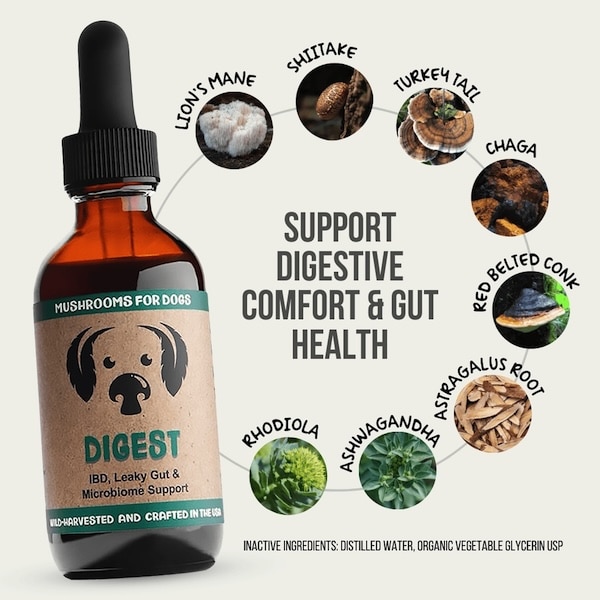 Lion’s Mane: Supports gut health by repairing and protecting the gut lining, crucial for pets with inflamed or damaged intestines.
- Turkey Tail: Promotes a balanced microbiome and strengthens the immune system, helping to regulate overactive immune responses in the gut.
- Chaga: Reduces inflammation, minimizes oxidative stress, and protects against further damage to the digestive system.
- Shiitake: Replenishes spleen qi, helps balance digestion, and supports the liver—essential for pets with IBD who may have compromised detoxification processes.
- Red Belted Conk: A lesser-known but powerful mushroom that aids in reducing inflammation and boosting immune function.
- Astragalus Root: Strengthens the immune system and supports overall vitality, helping pets recover from chronic inflammation.
- Ashwagandha: Reduces stress and balances the immune response, easing symptoms related to anxiety-driven IBD flares.
- Rhodiola: Improves resilience to physical stressors and supports energy levels, helping pets maintain stamina and vitality despite IBD challenges.
MycoDog Digest is carefully formulated using a spagyric triple-extraction process, ensuring maximum potency and bioavailability. It is free from harmful additives and based in organic vegetable glycerin, making it safe and effective for pets, an easy-to-dose formula for dogs with IBD.
Natural Support for IBD in dogs & pets
Using Full Spectrum Hemp Extract CBD alongside medicinal mushrooms, such as those in MycoDog Digest, offers a comprehensive, natural strategy for managing IBD in dogs and cats. These natural supplements target inflammation, support gut health, and modulate the immune system to help your pet feel their best.
FSHE CBD Oil works with the endocannabinoid system to reduce inflammation, improve gut health, and restore balance in the body. When paired with the immune-modulating and prebiotic benefits of medicinal mushrooms like Lion’s Mane, Chaga, Turkey Tail, and Shiitake, and synergistic adaptogens, the combination creates a powerful, holistic approach to IBD management.
Managing IBD naturally requires a well-rounded approach that includes CBD, medicinal mushrooms, and dietary adjustments. With products like MycoDog Digest and Full Spectrum Hemp Extract CBD Oil, pet parents can explore natural solutions that work in harmony to reduce inflammation, support digestion, and enhance their pets’ overall well-being.
Unlike conventional medications, which can sometimes cause side effects like liver or kidney damage, CBD and mushrooms offer safe, natural support. As always, consult your holistic veterinarian to create a tailored plan for your pet’s unique needs. Together, you can navigate the challenges of IBD and help your furry friend lead a happier, healthier life.